Search engine optimization has always been a fascinating mix of strategy, psychology, and a little bit of detective work. For years, marketers tried to understand what search engines want and how to help websites appear in front of the right audience. Then artificial intelligence entered the scene — and suddenly SEO started evolving faster than ever.
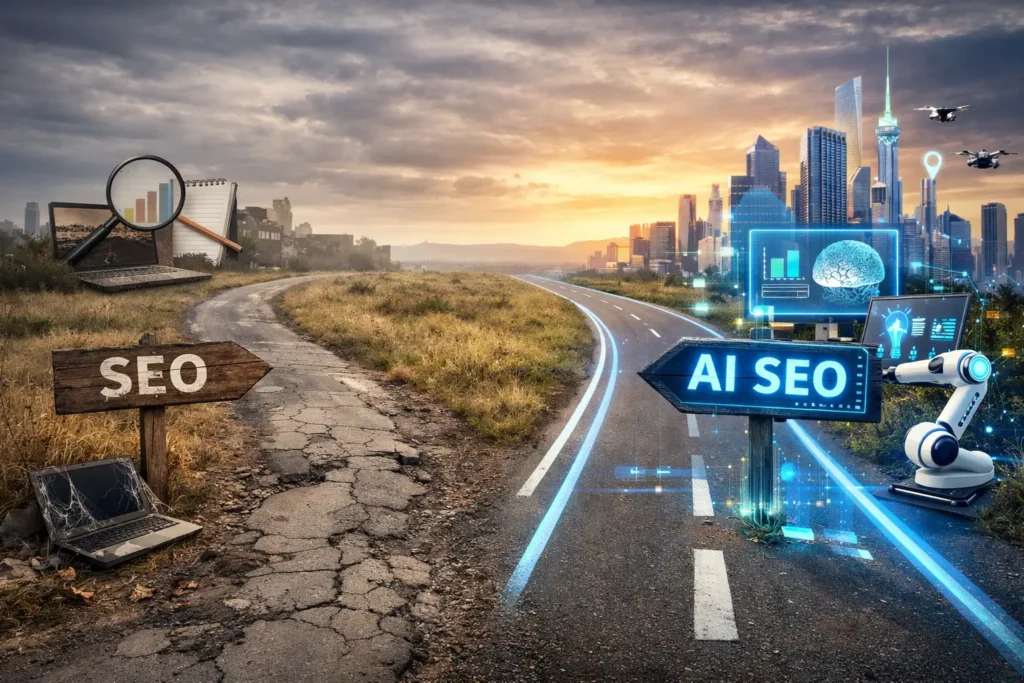
If traditional SEO is like navigating a map, AI SEO is more like having a GPS that constantly recalculates the route based on traffic, weather, and your destination. It helps marketers analyze huge amounts of data, identify patterns, predict outcomes, and optimize websites far more efficiently than humans could alone.
But before imagining robots running the entire internet, let’s break down what AI SEO actually means, how it works, and why it’s becoming one of the most powerful tools in modern digital marketing.
Understanding AI SEO – The Next Evolution of Search Optimization
AI SEO refers to the use of artificial intelligence technologies to improve and automate search engine optimization tasks. Instead of relying purely on manual analysis, AI tools can process enormous datasets and uncover insights that would normally take weeks — or months — for a human analyst.
In practical terms, AI can help with:
- Keyword research and search intent analysis
- Content optimization and semantic relevance
- Technical SEO audits
- Competitor analysis
- Predictive ranking trends
- Internal linking recommendations
Search engines themselves are heavily powered by artificial intelligence. Google’s algorithms such as RankBrain and BERT use machine learning to better understand search queries and the meaning behind content.
Because search engines are becoming smarter, optimization strategies must evolve as well. AI SEO is essentially the response to this shift — using intelligent tools to keep up with intelligent algorithms.
Why AI Is Changing the SEO Landscape
Imagine analyzing thousands of keywords, hundreds of competitor pages, and millions of search queries manually. Even the most dedicated SEO professional would probably need several lifetimes.
Artificial intelligence changes that equation dramatically.
AI systems can scan massive datasets within minutes and identify patterns that humans might completely miss. For example, AI tools can detect subtle relationships between topics, understand search intent variations, and even suggest entire content structures optimized for search visibility.
Some of the biggest advantages of AI SEO include:
- Faster data analysis
- More accurate keyword clustering
- Improved content relevance
- Automation of repetitive tasks
- Smarter competitor insights
In other words, AI doesn’t replace SEO professionals — it supercharges them.
Think of AI as a powerful assistant who never sleeps, never gets bored of spreadsheets, and doesn’t complain about analyzing 10,000 search queries before lunch.
AI SEO and Content Optimization
Content remains the backbone of SEO, but artificial intelligence is transforming how that content is created and optimized.
Modern AI-driven tools can analyze top-ranking pages and identify what they have in common — from semantic keywords to content length, headings, structure, and topical coverage. This allows marketers to create content that aligns much more closely with what search engines expect.
AI can help identify:
- Topic clusters that improve authority
- Missing keywords competitors are ranking for
- Content gaps in your website
- Opportunities to improve readability and engagement
However, this doesn’t mean AI should completely replace human creativity.
A robot might write technically optimized content, but humans still understand storytelling, humor, and emotional connection. The most effective approach combines both — AI-powered analysis with human expertise and creativity.
This balance is exactly why many businesses choose to work with an experienced marketing company in Calgary rather than trying to handle complex optimization strategies entirely on their own.
Technical SEO Becomes Smarter with AI
Technical SEO often feels like the mechanical side of optimization — crawling issues, page speed, indexing problems, and structured data.
While these tasks are essential, they can also be extremely time-consuming.
AI tools can automatically detect technical issues across an entire website and prioritize them based on potential ranking impact. Instead of manually digging through hundreds of pages, marketers receive intelligent recommendations that highlight exactly what needs attention.
For example, AI-driven SEO platforms can:
- Identify broken internal linking structures
- Detect crawlability issues
- Suggest improvements to site architecture
- Predict which pages have the highest ranking potential
This makes technical SEO less about endless manual checks and more about strategic improvements.
Predicting Search Trends Before They Happen
One of the most exciting aspects of AI SEO is predictive analytics.
Traditional SEO focuses on current rankings and historical data. Artificial intelligence, however, can analyze patterns in search behavior and forecast potential future trends.
Imagine knowing which topics are about to become popular before competitors even notice them. AI can analyze user behavior signals, emerging queries, and seasonal patterns to identify opportunities early.
This gives businesses a major competitive advantage.
Instead of reacting to trends, companies can position themselves ahead of them — publishing content and optimizing pages before demand peaks.
For organizations investing in AI SEO Calgary, this predictive capability can significantly improve long-term search visibility and organic traffic growth.
The Limits of AI – Why Human Expertise Still Matters
With all these impressive capabilities, it’s tempting to think AI could fully automate SEO.
Reality is a bit different.
Artificial intelligence excels at analyzing data and identifying patterns, but it doesn’t truly understand business goals, brand identity, or customer relationships. It can recommend optimizations, but it cannot replace strategic decision-making.
Successful SEO still requires:
- Understanding audience psychology
- Building brand authority
- Creating valuable content
- Developing long-term strategies
- Making judgment calls based on experience
AI is a powerful tool — but it works best when guided by experienced professionals who understand the broader marketing landscape.
That’s why businesses often achieve better results when working with specialists who combine advanced technology with real-world marketing expertise.
The Future of AI SEO
Search engines are becoming increasingly intelligent. Algorithms are evolving to understand context, intent, and user behavior with remarkable accuracy.
As this transformation continues, AI-driven optimization will become less of an advantage and more of a necessity.
Future developments will likely include:
- Even deeper search intent analysis
- Fully automated technical audits
- Real-time ranking prediction models
- Advanced content personalization
- Smarter voice and conversational search optimization
The businesses that adapt to these changes early will gain a significant edge in visibility, traffic, and online growth.
Final Thoughts
AI SEO represents a major shift in how websites are optimized for search engines. By combining artificial intelligence with strategic marketing expertise, businesses can analyze data faster, uncover hidden opportunities, and create more effective optimization strategies.
However, technology alone rarely guarantees success.
The most powerful results come from blending AI-driven insights with experienced human guidance. While tools can provide recommendations, professionals know how to turn those insights into real-world growth.
And when it comes to navigating the rapidly evolving world of AI-powered search optimization, having the right team behind the strategy can make all the difference.